
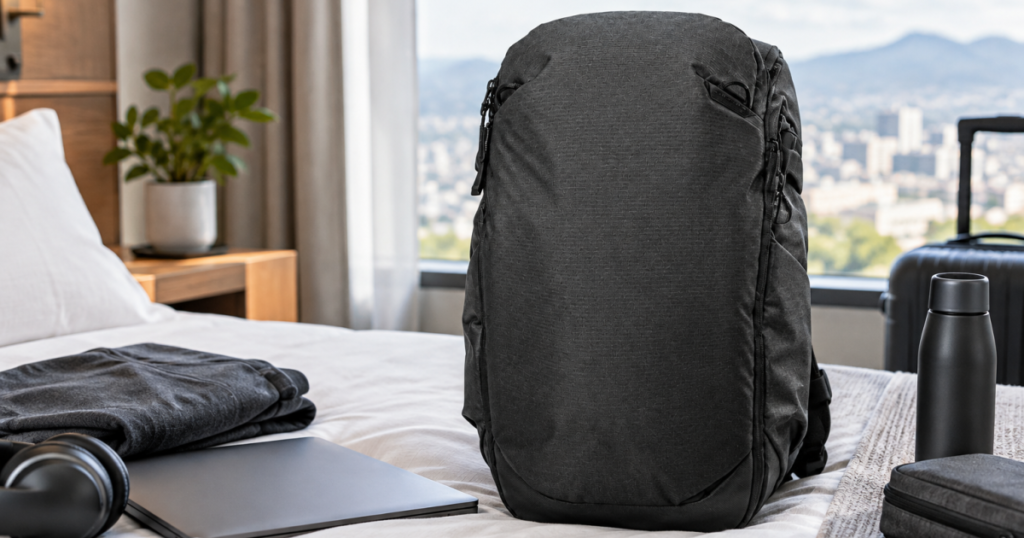
The Peak Design Travel Backpack 30L is built for a familiar travel-work problem: one bag has to handle clothes, a laptop, daily carry, and the awkward little items that make a temporary desk work. This Travel Backpack 30L review looks at whether Peak Design’s smaller expandable travel pack earns its space for short trips and mobile workdays.
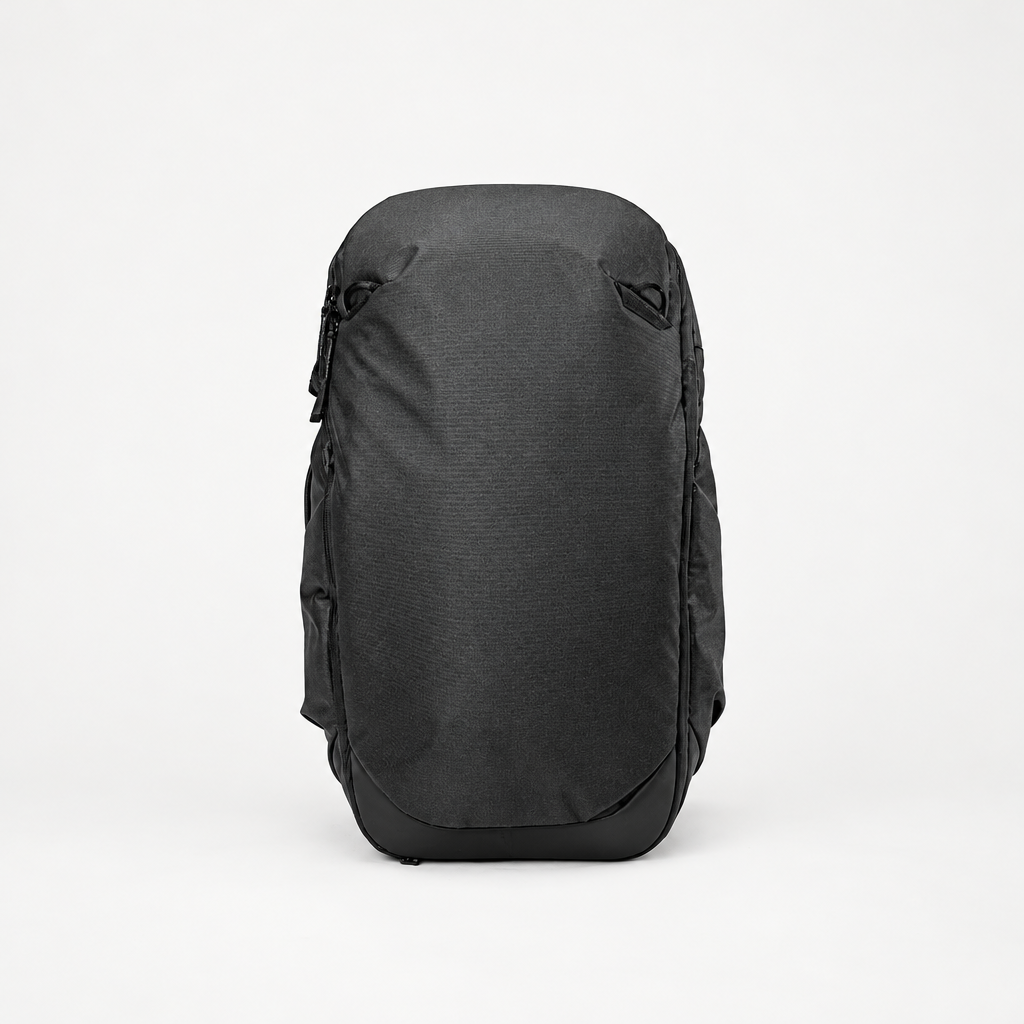
Peak Design Travel Backpack 30L
A polished expandable backpack for short work trips where organized packing matters more than maximum capacity
Quick verdict: the Peak Design Travel Backpack 30L makes the most sense for people who want one polished, flexible bag for a few days away rather than a maximum-capacity hauler. Its best traits are the expandable volume, full rear access, laptop and tablet sleeves, and tidy small-item organization. The main cautions are equally clear: the hip belt is optional, the bag is weatherproof rather than fully waterproof, and carry-on fit still depends on the real airline and aircraft situation.
Pros & Cons
Pros
- Expandable 27L-to-33L capacity gives it a useful short-trip range instead of a fixed-volume layout.
- Rear hatch access makes packing and unpacking more controlled than a simple top-loading backpack.
- Padded laptop and tablet sleeves keep core work devices integrated into the travel layout.
- Lifetime warranty coverage adds confidence for a premium backpack purchase.
Cons
- Weatherproof materials do not make the whole backpack waterproof.
- Hip-belt support is an optional accessory rather than part of the base Travel Backpack-only purchase.
- Carry-on fit follows Peak Design’s sizing claim, not a guarantee across every airline or aircraft.
Product Details
- Price: $249.95 through Peak Design’s US-facing product page.
- Capacity: compressed 27L, about 1,648 cubic inches; expanded 33L, about 2,014 cubic inches.
- Carry-on positioning: Peak Design says it meets international carry-on size requirements in both compressed and expanded form.
- Main access: rear hatch opening for broad packing and unpacking access.
- Device storage: padded laptop and tablet sleeves are included.
- Top pocket: enlarged and subdivided with stretch and zip pockets for items like keys, glasses and a passport.
- Materials: weatherproof 100% recycled 400D nylon canvas shell with a 900D bottom liner.
- Main zipper: weatherproof #10 UltraZip with proprietary abrasion-resistant thread.
- Carry features: tuck-away shoulder straps, 360-degree grab handles and concealed external carry straps.
- Hip belt: optional accessory, not part of the base Travel Backpack-only setup.
The capacity sweet spot is short-trip travel, not maxed-out hauling
The most important number is not “30L” as a fixed volume. Peak Design defines this bag as compressing to 27L and expanding to 33L. That range is the whole pitch: tighter and cleaner for daily carry or a lighter overnight setup, roomier when a short trip needs clothes, toiletries and a compact work kit.
For remote work travel, that expandability matters because the bag has to change roles. A conference day can mean laptop, tablet, charger, headphones and a layer. A two-night trip adds clothing and small essentials. The Travel Backpack 30L is better framed as a flexible short-travel backpack than as a dedicated commuter bag or a true large carry-on replacement.
Peak Design’s carry-on sizing statement is useful, but it is not a universal boarding guarantee. Aircraft, airline rules and gate decisions vary. The practical takeaway is that the bag is designed around carry-on expectations, while the buyer still needs to pack like someone who may face a tighter overhead bin or under-seat squeeze. Overstuffing any expandable bag is how a sleek travel setup becomes a fabric brick with straps.
The rear hatch makes packing feel more controlled
The rear hatch is one of the strongest workflow choices here. A top-loading backpack can work well for a commute, but it becomes annoying when socks, cables and a shirt all migrate to the bottom. Full rear access makes the Travel Backpack 30L behave more like a compact soft suitcase when laid open, which is a better fit for packing from a hotel bed, rental floor or narrow desk chair.
That matters most when the bag is carrying both work gear and clothing. You can separate the items that need to come out at arrival from the items that can stay buried until the evening. It also reduces the “digging at the airport gate” problem, where one missing adapter turns the entire bag into a public archaeology site.
The enlarged top pocket adds a second useful layer. Peak Design says it is subdivided with stretch and zip pockets for keys, glasses, a passport and similar items. For travel-work use, that is the right kind of organization: fast-access storage for objects that are small enough to disappear but important enough to derail a morning if they do.
Laptop and tablet storage fit the mobile-office brief
The included padded laptop and tablet sleeves are a core reason this bag belongs in a travel-work conversation rather than just a luggage conversation. A remote-work backpack does not only need volume; it needs a predictable place for the devices that drive the workday.
The sleeves make the Travel Backpack 30L a cleaner option for people carrying a laptop plus a tablet, e-reader or secondary screen device. The bag’s official details do not define device size compatibility, so the fair editorial reading is functional rather than absolute: this is a backpack designed with protected work-device storage as part of the core layout.
If the backpack is part of a broader mobile-office kit, the bag decision should also connect to cable, charger and display planning. A compact tech pouch is only useful when the devices inside actually work together, and the Travel Work Gear Compatibility Checker is a useful next step for matching laptops, chargers, hubs, cables and portable displays before a trip.
Power banks deserve their own planning moment because capacity rules affect air travel. If this backpack will carry backup power for a laptop or phone, use the Lithium-Ion Power Bank 100 Wh Carry-On Limit reference to keep the charging kit aligned with carry-on battery expectations.
Access pockets and side storage help, but this is still a backpack
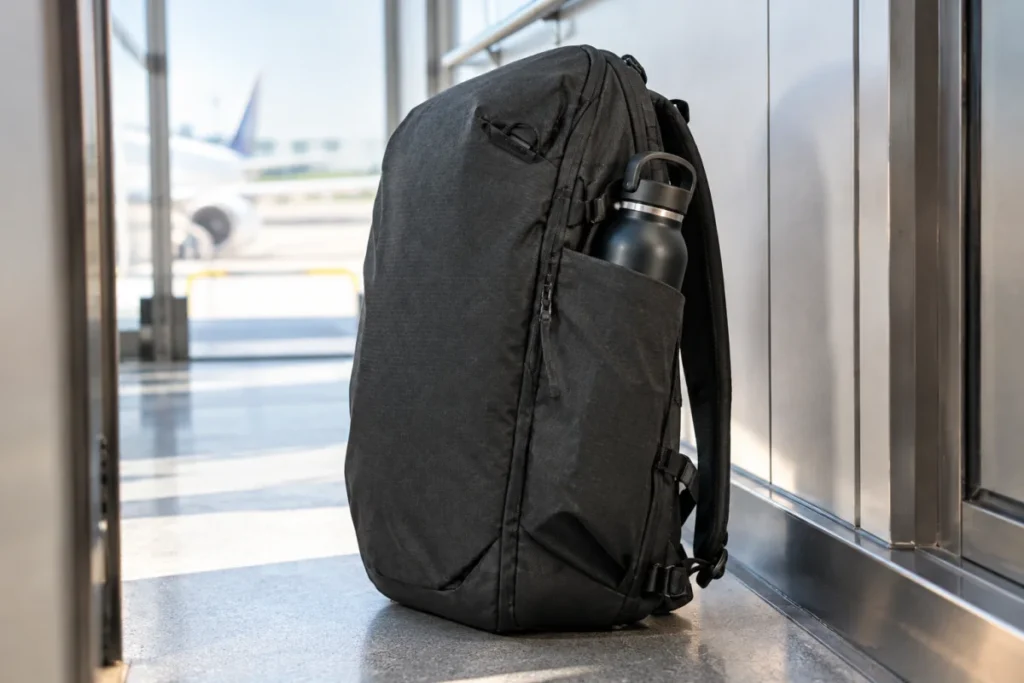
The expansive side pockets are useful for water bottles, tripods and similar carry. For a work traveler, they can also reduce main-compartment clutter by keeping bulky cylindrical items outside the packed interior. That said, external side storage always asks for judgment: a bottle, umbrella or tripod adds width and can snag when sliding through crowded aisles.
The concealed external carry straps give the bag more flexibility for odd items, but they should be treated as occasional utility rather than permission to strap half an office to the outside. The cleaner the outside of a travel backpack stays, the easier it is to move through airports, elevators, train platforms and hotel lobbies without the bag fighting back.
The 360-degree grab handles are a practical detail that becomes more valuable in transit than it looks on a product page. A backpack used for travel is constantly lifted sideways, pulled from overhead storage, shifted into a rideshare trunk and moved around cramped rooms. Multiple grab points help the bag behave less like a sack and more like a controlled piece of travel equipment.
The carry system is flexible, with one important comfort trade-off
Tuck-away shoulder straps make sense for a bag that has to shift between backpack mode and cleaner carry. They can reduce loose-strap annoyance when the bag is stored or carried by a handle. That is a real convenience for short travel, where bags are handled repeatedly in small bursts rather than worn continuously all day.
The hip belt detail is the main comfort caveat. Peak Design lists the hip belt as an optional accessory. That does not make the bag worse by default, but it changes the value equation for heavier loads or longer walking days. If your trips regularly include long walks with a fully expanded pack, the base backpack-only purchase is not the full support setup.
For many remote workers, that trade-off is acceptable. A 27L-to-33L bag aimed at shorter travel does not need to behave like a trekking pack. But if the expected load includes camera gear, dense tech, clothing and extra shoes, the optional hip belt becomes more than a nice-to-have. It becomes part of the real cost and configuration decision.
Weatherproof construction is useful, not invincible
Peak Design uses a weatherproof 100% recycled 400D nylon canvas shell, a 900D bottom liner and a weatherproof #10 UltraZip with proprietary abrasion-resistant thread. Those are strong signals for a premium travel backpack intended to handle messy real-world movement: sidewalks, shuttle floors, rental entryways and sudden rain between buildings.
The important distinction is that weatherproof does not mean waterproof. The official product information does not give an IP rating or claim that the whole backpack is waterproof. For mobile work gear, that distinction matters because laptops, tablets and documents do not care whether water entered through a seam, zipper path or soaking exposure. Weather resistance supports everyday travel use; it is not a license to treat the bag like dry storage on a boat.
The warranty also strengthens the quality story. Peak Design’s lifetime warranty covers manufacturing defects and failures or breakages that render the product non-functional. It excludes cosmetic wear, misuse, accidents, intentional damage, Factory 2nd products and non-genuine products. That is a meaningful support policy for a $249.95 backpack, provided the buyer understands that normal scuffs and abuse are not the same as a functional failure.
Value depends on how often one bag replaces two
At $249.95, the Travel Backpack 30L sits in premium territory. The value case is strongest when it replaces a separate daily backpack plus a small travel bag for short trips. Its expandable capacity, device sleeves, top-pocket organization, rear hatch and carry-handle layout all point toward one-bag travel with a professional work kit, not bargain packing.
It is less compelling if the buyer only needs a basic laptop backpack, wants a hip belt included from the start, or regularly packs beyond the 33L expanded volume. It is also not the right default review subject for camera-bag use unless paired with Peak Design’s compatible camera accessories; as a standalone purchase, it is best judged as an expandable travel and everyday backpack.
The editorial preference is clear: choose it when you want a polished short-trip bag that can move from airport to meeting to temporary desk without looking or functioning like a hiking pack. Choose something simpler if your travel setup is light enough that rear access, expansion and accessory-friendly organization will mostly sit unused.
Verdict
Score: 8.9/10. The Peak Design Travel Backpack 30L earns its recommendation through three big factors: its 27L-to-33L expandable capacity, its rear-hatch packing access, and its laptop/tablet-ready organization. Those are exactly the details that matter when one backpack has to carry both clothes and a credible work setup.
The compromises are not hidden. Weatherproof construction is not full waterproofing, the hip belt is optional, and carry-on suitability rests on Peak Design’s sizing claim rather than a universal airline promise. Still, for short trips and mobile workdays where clean packing, quick access and premium build matter, this is a very strong travel-work backpack.
Peak Design Travel Backpack 30L
A polished expandable backpack for short work trips where organized packing matters more than maximum capacity
You might also like: Thunderbolt 4.